- Jun 29
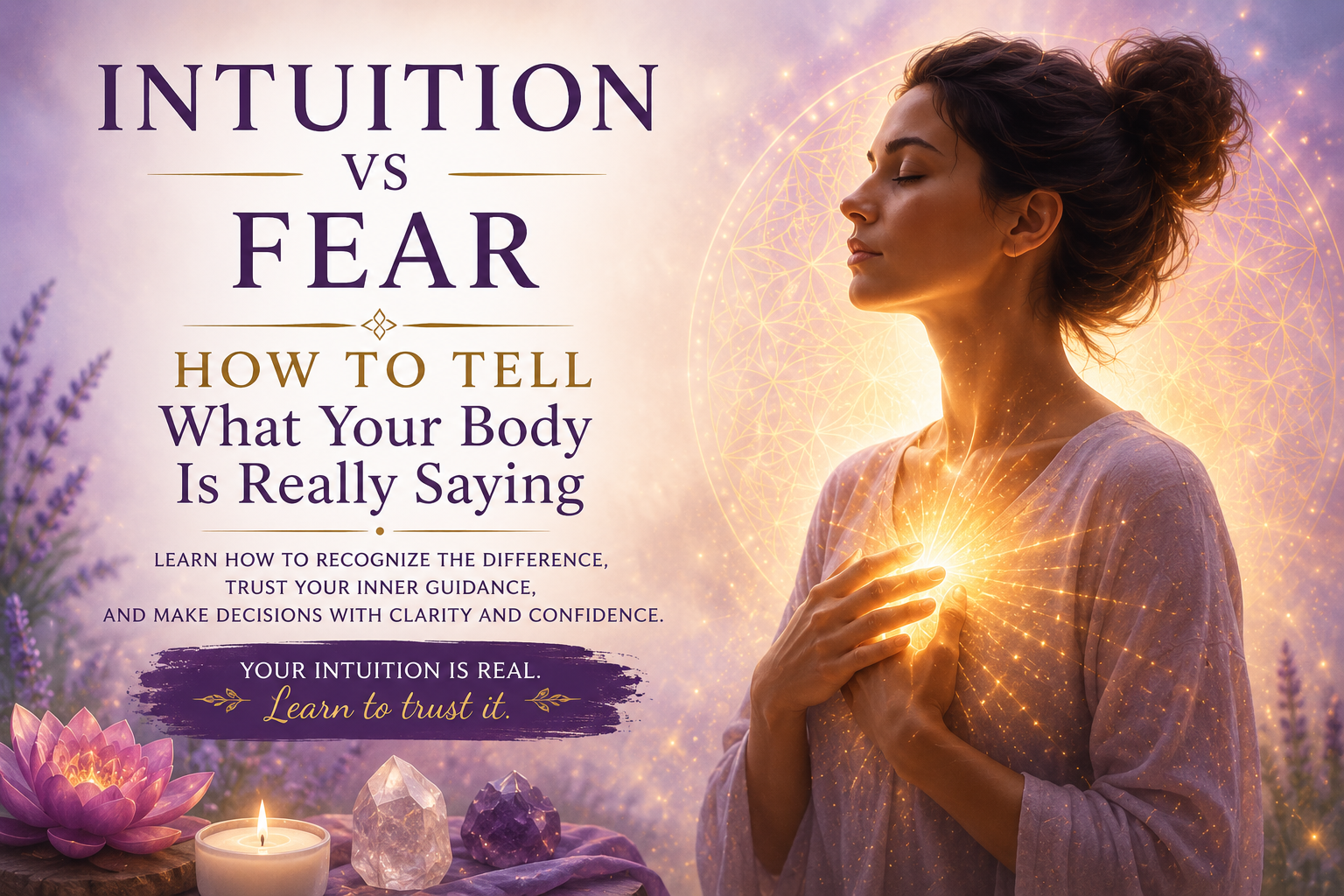
Intuition vs Fear: How to Tell What Your Body Is Really Saying
- Joy Elle
- Self-Trust, Intuition Development, Emotional Awareness, Mediumship
- 0 comments
Most people think they don't have intuition.
But in reality, they're simply misreading it.
The real challenge isn't that intuition is absent—it's that many people confuse it with fear, anxiety, or overthinking. That confusion can quietly influence your decisions, relationships, confidence, and even the direction of your life.
If you've ever found yourself asking, "Was that my intuition, or was it just my imagination?" you're not alone.
Learning the difference between intuition and fear is one of the most important steps toward trusting yourself more deeply.
The Real Problem Isn't a Lack of Intuition
Many people believe intuition is a rare gift that only a few people possess.
In my experience, that's simply not true.
Every person has intuitive abilities. The difference is that we each receive intuitive information in different ways, and most of us were never taught how to recognize our own natural signals.
Instead, we were taught to:
Question our first instincts.
Look outside ourselves for answers.
Trust logic before inner knowing.
Wait for proof before believing what we feel.
Over time, those messages create a habit of self-doubt. Even when intuition is speaking clearly, we often dismiss it before we've even had a chance to recognize it.
What Intuition Actually Feels Like in the Body
One of the biggest misconceptions about intuition is that it is only a thought.
Often, it is much more than that.
For many people, intuition first appears as a physical sensation.
Depending on the person, intuition may feel like:
A wave of calm certainty.
Chills or energy moving through the body.
A deep sense of knowing without needing evidence.
A feeling of expansion rather than contraction.
Quiet clarity instead of mental noise.
It doesn't usually arrive through panic.
It arrives through presence.
When you begin paying attention to how your body responds, you may discover that your intuition has been communicating with you all along.
Intuition vs. Fear: What's the Difference?
Fear and intuition can both feel powerful.
That's why they are so often confused.
However, they create very different experiences.
Fear often feels like:
Tightness in the chest or stomach.
Racing thoughts.
Anxiety or nervousness.
Mental spiraling.
A constant need for reassurance.
Fear wants certainty before taking action.
Intuition often feels like:
Quiet confidence.
Calm clarity.
Expansion.
A simple inner knowing.
Peace, even when the answer is difficult.
Intuition doesn't always explain itself.
It simply knows.
The more familiar you become with your own intuitive language, the easier it becomes to recognize the difference.
Why We Learn to Distrust Ourselves
Many people don't lose their intuition.
They lose their trust in it.
Throughout life, we receive messages that encourage us to question ourselves.
We become afraid of making mistakes.
We worry about being judged.
We seek approval before making decisions.
Eventually, fear becomes louder than inner knowing.
This isn't because intuition stopped working.
It's because fear learned how to interrupt it.
The beautiful thing is that trust can be rebuilt.
What Changes When You Start Trusting Your Intuition
As people begin trusting their intuition, they often notice profound changes.
Decision-making becomes easier.
Relationships become clearer.
Self-confidence grows naturally.
There is less internal conflict because you stop arguing with yourself.
Instead of asking,
"What should I do?"
You begin recognizing,
"I already know."
That doesn't mean every decision becomes easy.
It means you stop abandoning yourself in the process.
Intuition Shows Up in Everyday Moments
Many people expect intuition to appear only during dramatic spiritual experiences.
In reality, it often arrives in the simplest moments.
It might be:
Thinking about someone moments before they call.
Feeling guided to take a different route home.
Having an unexplained sense to reach out to someone.
Knowing not to ignore a feeling, even when you can't explain it.
Feeling inspired to encourage a stranger who seems to need kindness.
Intuition isn't always dramatic.
Sometimes it's simply a quiet invitation to pay attention.
Fear Is Loud. Intuition Is Clear.
Fear usually demands immediate attention.
It creates urgency.
It pushes.
It argues.
Intuition rarely behaves that way.
It is steady.
It is clear.
It often repeats gently until we are ready to listen.
Learning to recognize that difference changes everything.
Trust Is a Practice
Trusting your intuition doesn't happen overnight.
Like any relationship, it grows through experience.
The more you acknowledge your intuitive nudges, the more confidence you develop.
You begin noticing patterns.
You begin recognizing your own language.
Eventually, what once felt uncertain begins to feel familiar.
Intuition becomes less mysterious and more natural.
Final Thoughts
If you've ever questioned your intuition, consider this:
Perhaps your intuition has never stopped speaking.
Perhaps you've simply been taught not to listen.
Your intuition doesn't ask you to become someone new.
It invites you to remember who you already are.
And the more you learn to recognize your unique intuitive signals, the easier it becomes to move through life with greater clarity, confidence, and peace.
Discover Your Intuitive Type
Not everyone experiences intuition in the same way.
Some people primarily feel it in their bodies.
Some simply know.
Others receive intuitive information through images, symbols, dreams, or inner guidance.
Understanding how your intuition naturally communicates is often the missing piece that helps you stop second-guessing yourself.
Take the Intuitive Type Quiz to discover your natural intuitive pattern and learn how to strengthen your confidence in what you already receive.
Then, if you're ready to develop your intuition in a structured, grounded way, explore Alpha Mediumship™ Level 1, where you'll learn practical tools to recognize your intuitive signals, separate fear from guidance, and build lasting trust in your own inner knowing.